
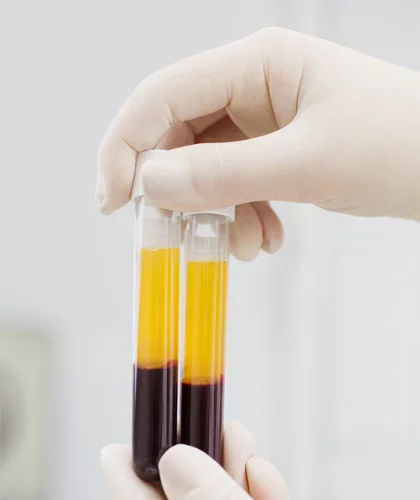
PRP is a plasma fraction of autologous blood containing a platelet concentration above normal.
Beyond their roles in normal hemostasis, the importance of platelets has steadily increased with the understanding of their active role in the wound healing process. In the wound healing process, platelets trigger the regulation of inflammatory response, chemotaxis, atherothrombosis, coagulation, and cellular differentiation. They also contribute to the formation of new extracellular matrix. With growth factors, cytokines, chemokines, and coagulation factors released from their alpha, lysosomal, and dense core granules, they play a role in hemostasis and wound healing.
Growth factors released from platelet granules include mitogenic growth factors such as PDGF (platelet-derived growth factor), TGF-beta-1-2 (transforming growth factor), IGF (insulin-like growth factor), EGF (epidermal growth factor), VEGF (vascular endothelial growth factor), PDF4 (platelet factor 4), PDEGF (platelet-derived endothelial growth factor), PDAF (platelet-derived angiogenic factor), as well as osteocalcin, osteonectin, fibrinogen, fibronectin, vitronectin, coagulation factors, certain adhesive proteins, fibrinolytic factors, antiproteases, membrane glycoproteins, angiogenesis-regulating proteins, and bactericidal proteins.
To leverage all these effects, PRP has been in medical service for approximately 30 years. It has been used in chronic wounds since 1985. Today, its application areas are primarily surgical and aesthetic medicine. Surgically, it is used in orthopedic interventions, dental and oral procedures, maxillofacial surgery, spinal surgery, cardiac bypass surgeries, angiogenesis-requiring procedures, flap transfer surgeries in plastic surgery, macular lesions, and corneal epithelial defects. It is particularly seen as a promising technique in orthopedic and traumatological surgery for bone, cartilage, and tissue defects. In dermatology and plastic surgery, it was historically used more for chronic wounds, ulcers, and burn care. Today, in addition to these, and increasingly, its application areas include skin rejuvenation, dermal filling, acne scars, alopecia, melasma, hair transplantation, and enhancing wound healing after chemical peels, microneedling, and laser procedures.
Application frequencies are recommended as 4-6 sessions, once every 2-4 weeks.
Side effects and contraindications: Since it is prepared from autologous blood, there is no risk of infectious diseases or immunological reactions. No side effects other than injection reactions like erythema and ecchymosis have been reported. PRP is not performed in patients with critical thrombocytopenia, hypofibrinogenemia, hemodynamic instability, sepsis, those receiving anticoagulant therapy, pregnant and breastfeeding patients, patients with acute and chronic infections, in the presence of tumors and metastases, or in those with autoimmune diseases.
Let Us Call You
We will contact you immediately upon receiving your message. Required fields are marked with *.

